
"coffee transport South America"
700 article(s) found
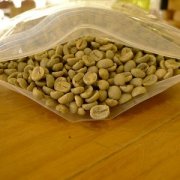
Tarasu coffee beans from Central America and Costa Rica, one of the major coffee producers in the world.
Costa Rican Coffee (Costarica Coffee): Costa Rican coffee is produced in the Republic of Costa Rica (The Republic of Coffee) in southern Central America. Its coffee quality is similar to Colombian coffee and is suitable for blending mixed coffee. The coffee beans produced in the high latitudes of Costa Rica are famous, rich and flavored in the world.

Fine coffee Honduran coffee features introduction to Honduran coffee
Honduras, the full name of the Republic of Honduras (Spanish: Repblica de Honduras), is a mountainous country in Central and North America, bordering Guatemala, El Salvador and Nicaragua, located between the Pacific Ocean and the Caribbean Sea, with a coastline. Most of its citizens are of mixed descent, so most of them believe in Catholicism. In Honduras, music is popular and contains

A brief introduction to the description of flavor, taste and aroma characteristics of coffee beans in rich and balanced Xuemai Manor.
The overall taste of Bolivian coffee is rich and balanced, the aroma is rich and unique, similar to the mixture of flower and fruit aroma, impressive. The perennial low temperature environment makes the coffee fruit grow slowly, compact enough, the aroma is also charming, the floral aroma is obviously medium and low acidity, but the feeling is not monotonous, on the contrary, it appears soft and fresh, with the sour taste of citrus fruit. Bolivia, no.

Boutique Coffee Honduras Coffee Manor Honduras Coffee producing area
Honduras, the full name of the Republic of Honduras (Spanish: Repblica de Honduras), is a mountainous country in Central and North America, bordering Guatemala, El Salvador and Nicaragua, located between the Pacific Ocean and the Caribbean Sea, with a coastline. Most of its citizens are of mixed descent, so most of them believe in Catholicism. In Honduras, music is popular and contains

Boutique coffee the Honduran coffee producing area San Juan Theodore
Honduras, the full name of the Republic of Honduras (Spanish: Repblica de Honduras), is a mountainous country in Central and North America, bordering Guatemala, El Salvador and Nicaragua, located between the Pacific Ocean and the Caribbean Sea, with a coastline. Most of its citizens are of mixed descent, so most of them believe in Catholicism. In Honduras, music is popular and contains

Where is the coffee from Papua New Guinea? introduction to the flavor of Papua New Guinea coffee.
Professional coffee knowledge exchange more coffee bean information please follow the coffee workshop (Wechat official account cafe_style) front street-when introducing coffee to Papua New Guinea, the most frequently introduced beans are basically from Asia, Africa, Central and South America. People often mislead people into thinking that these three continents are the only coffee producers in the world. In fact, Oceania also has a place in more than 70 coffee-producing countries.

A brief introduction to the treatment method of grinding degree and baking degree of fine coffee beans in Xuemai Manor with rich and unique aroma.
We know that Arabica coffee cannot be grown in cold places above 2000 meters above sea level. if the altitude is too high, coffee trees will frost because the temperature is too low. So Bolivian coffee is mainly grown in the Yungas region northeast of La Paz. It borders the Amazon basin and is about 1500-2500 meters above sea level with an average annual temperature of about 10-15 ℃. Therefore, guarantee

Exploring the secrets of South American coffee inspires summer inspiration
Push open the R-marked wooden doorknob and walk into the quiet space with the aroma of coffee, which is not difficult to keep the heart away from the hustle and bustle and impetuous feeling. On a sticky and impetuous summer day, sitting in front of the hand bar at Starbucks Chart: a book, a cup of hand, a couple of stories and face-to-face communication with the coffee master is enough for me to reap a lazy and fulfilling afternoon. Approach the bar, on the stage

Costa Rican coffee beans and coffee beans
Costa Rica has many advantages, but it must be taken into account that it increases the additional transportation costs, which may well make coffee production unprofitable. Costa Rican coffee has adopted new technologies to increase efficiency, including the use of electric eyes to select beans and identify beans of irregular size. Tarasu is located in the south of San Jos, the capital of the country, and it is heavily affected by the country.
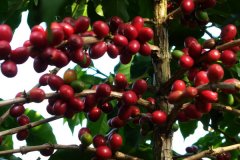
Low-acidity, moderately roasted coffee beans of the World Coffee Center of Central and South America.
Brazil, a low-acidity, moderately roasted coffee bean from the World Coffee Center, is vividly compared to the giant and monarch of the coffee world. There are about 3.97 billion coffee trees there, and small farmers now grow 75% of the country's coffee. The number of coffee producers in Brazil is twice or even three times that of Colombia, the second largest coffee producer in the world.

Introduction of Coffee Variety and Flavor in Copacabana producing area of Bolivia
For more information on coffee beans, please follow the Coffee Workshop (Wechat official account cafe_style) Bolivia is a landlocked country in South America and the center of the ancient Inca empire. It is also one of the few countries in South America where the local language is still widely used. From the peaks of the Andes to the vast saline plains, Bolivia has diversity

Colombian Coffee Culture how to drink Coffee
Colombia is located in northwestern South America, bordered by the Pacific and Atlantic oceans. Panama in the northwest, Venezuela in the east, Brazil in the southeast, Peru in the south and Guadore in the southwest. Colombian Coffee Culture in 1808, a priest first introduced coffee to Colombia from the French Antilles via Venezuela. Today the country is the second largest after Brazil

Costa Rican Coffee with Light and Pure Flavor description of Flavor and Flavor
The Government of Costa Rica has 21 ministries, namely: Ministry of Foreign Affairs and worship, Ministry of the President, Ministry of Internal Affairs, Police and Public Security; Ministry of Finance, Ministry of Foreign Trade, Ministry of economy, Industry and Commerce; Ministry of Planning and Economic Policy; Ministry of Health; Ministry of Science and Technology; Ministry of decentralization and Local Development; Ministry of Social Welfare and Family; Ministry of Public works and Transport; Ministry of Public Education; Ministry of Housing and settlement

Colombian Coffee Culture Fine Coffee latest Information
Colombia is located in northwestern South America, bordered by the Pacific and Atlantic oceans. Panama in the northwest, Venezuela in the east, Brazil in the southeast, Peru in the south and Guadore in the southwest. In 1808, a priest introduced coffee to Colombia for the first time from the French Antilles via Venezuela. Today, the country is the second largest coffee producer after Brazil and the largest Arabica in the world

A brief introduction to the Market Price of High-quality Fine Coffee Bean varieties in Xuemai Manor
The early Bolivian coffee was of low quality and the market was very poor. Usually the picked coffee fruit is bumped all the way to the processing plant after a simple peeling treatment. Due to the imperfect infrastructure, the traffic is underdeveloped. Coffee farmers have to overcome the rugged mountain road and transport the beans to the higher altitude area of La Paz for washing. If the coffee fruit can not be delivered to the processing in time

[2] A brief discussion on Bolivian Coffee Annual output of Bolivian Coffee
Professional coffee knowledge exchange more information about coffee beans Please follow the coffee workshop (Wechat official account cafe_style) if you want to talk about the paradise of coffee bean growth, it is Bolivia. This producing area can be regarded as one of the most recommended boutique coffee producing areas. Most of the coffee beans in this producing area are a little sweet and very pleasing, but the number of coffee beans is very small.
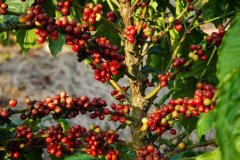
Important conditions of Coffee cultivation
There is a noun called "coffee belt". There are more than 60 coffee producing countries in the world, most of which are located in the tropics and subtropics between the Tropic of Cancer (23 °26 'north and south). This coffee growing area is called "coffee belt (Coffee Belt)" or "coffee area (Coffee Zone)".

Introduction to washed Arabica beans and coffee beans in Papua New Guinea
The coffee beans of Papua New Guinea are processed washed Arabica beans with a taste similar to the bright notes of Central and South America, with obvious sour aromas, sometimes orange, flower and fruit, slightly spicy and chocolate, and long-lasting sweet aromas of caramel. Flavor reference: refreshing herbaceous and floral aromas, tenderness of Central and South American beans, slightly sour, fruity, sticky

The flavor and taste of Mexican coffee beans with the fullest grains. Introduction to the characteristics of fine coffee in manor area.
Water transport, especially sea transport, undertakes the task of transporting part of Rico's goods, domestic goods and outbound passengers. According to the statistics of the national port system, from January to December 2013, the national freight container load reached 288 million tons of cargo, an increase of 1.6% over the same period last year. Among them, the deadweight of oil and petroleum derivatives alone reached 122 million tons, accounting for 42.5% of the total freight; bulk minerals

A brief introduction to the History and Culture of the Origin and Development of Colombian Coffee
Colombia is fortunate to have Atlantic and Pacific ports, which helps to reduce the cost of transporting coffee. In South America, she is the only country with this condition. The main production areas of Colombia are in the central and eastern mountains. The most important plantations along the central mountains are located in Medellin, Almenia and Manisales. In the above three areas